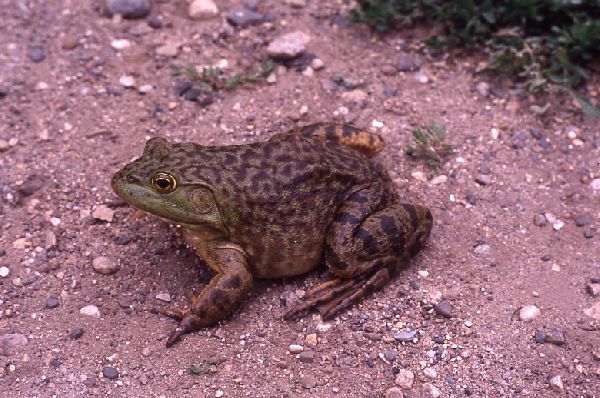
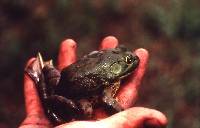
Description: This is the largest North American frog. No dorsolateral fold is present. Length [is] 3 1/2 - 8 inches (9-20.3 cm). [Color is] green skin coloration with yellow throat in males and white in females. [They have] a resonant series of deep bass notes sounding like rrr-uum or jug-o-rum. The bullfrog is named for its deep call, which sounds like a bull roaring. (MN DNR, 2022)
Food: Bullfrogs eat small mammals, birds, reptiles, fish and even other frogs. (MN DNR, 2022)
Habitat: Breeding habitat: Breeding occurs in permanent bodies of water. Summer habitat: This highly aquatic frog prefers large bodies of water such as lakes, ponds, sluggish streams, and backwaters of rivers. Although introduced local populations occur in several counties in central and southern Minnesota, this species is only native to the southeastern corner of the state. Winter habitat: Aquatic. (MN DNR, 2022)
Reproduction: Bullfrogs begin to breed in wetlands, ponds, and shallow lakes between age four and eight. They breed later in the year than many other frogs. A female bullfrog may lay 2,000 to 25,000 eggs on the surface of the water after mating. It takes two years for bullfrog tadpoles to develop legs and emerge from the water and three additional years to reach maturity. (MN DNR, 2022)
Conservation Status: Formerly bullfrogs were found only in the southeastern corner of Minnesota. In the past, people have tried to establish bullfrog populations in other parts of the state. (MN DNR, 2022)