|
Rana sylvatica
 |
|
|
Family: Ranidae
Wood frog
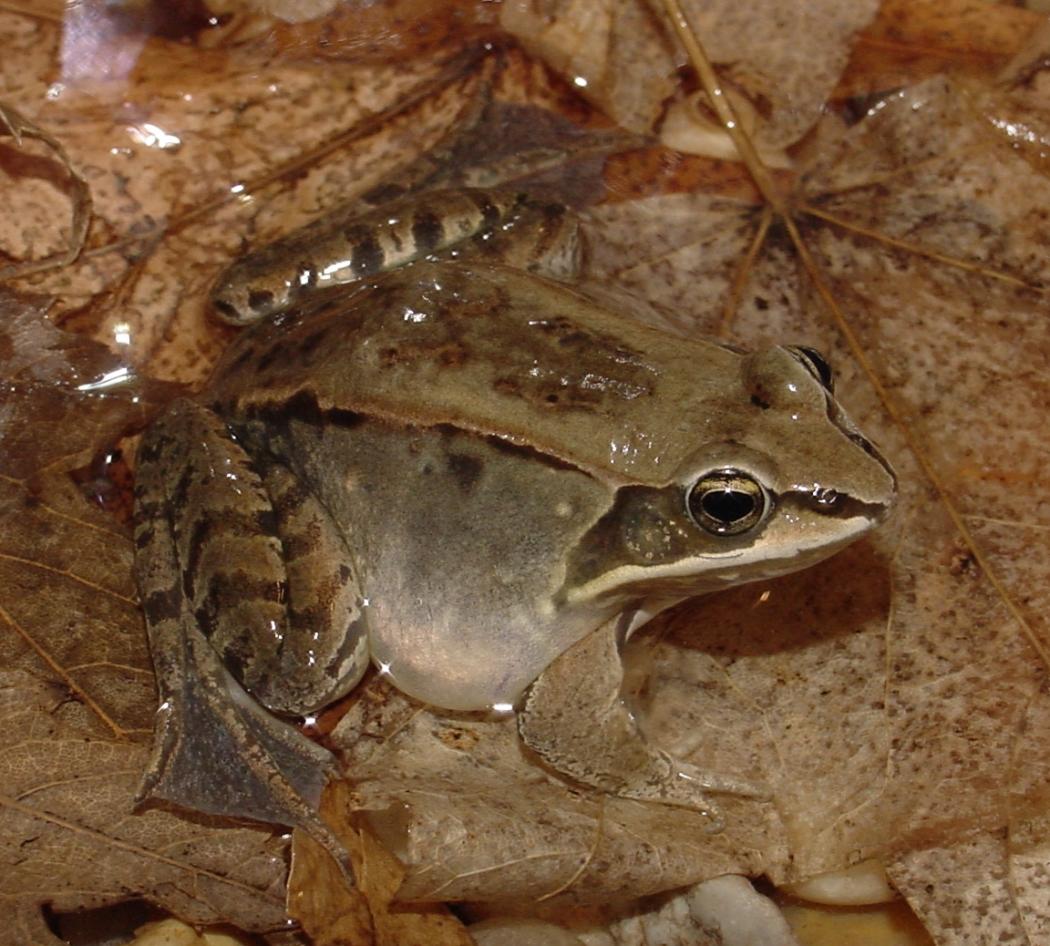 |
Description: This brown, palm-sized frog has a dark patch over its eyes and two big ridges (dorsolateral folds) run down its back. Size: The wood frog is 2 inches to 2 3/4 inches long. Color: A dark, masklike patch extends backwards from the eyes. Skin coloration is typically brown, but can range from shades of reddish-brown to almost black. Sounds: Often the first species heard calling in the spring. Their short chuckle is a harsh racket, racket, racket. A chorus sounds like the feeding call of the mallard. Males have paired vocal sacs. (MN DNR, 2022) Habitat: As their name implies, wood frogs live in forested areas such as those found in northern Minnesota. They can be found under logs and rocks far from water, or in ponds. They breed in wetlands, lakes, and stream backwaters, and overwinter under fallen leaves on the forest floor. In Minnesota, wood frogs are found in the northern, east-central, and southeastern part of the state. Breeding habitat: Bogs, temporary forested wetlands, margins of forested lakes, and backwaters of streams. Summer habitat: Occupies woodland and forest habitat, sometimes traveling a considerable distance from water. Winter habitat: Terrestrial, tolerating partial freezing of body fluids. Overwinters in leaf litter of the forest floor. (MN DNR, 2022)
Phenology is the study of seasonal changes in plants and animals, and how those changes relate to climate. Phenology information and historical data are available on the Season Watch website (use the "Season Watch" link above). Season Watch is a collaboration between Northern Community Radio and the University of Minnesota. Funding from the Legislative-Citizen Commission on Minnesota Resources. Conservation Status: Wood frogs have no special status in Minnesota. (MN DNR, 2022) |
  |
|
