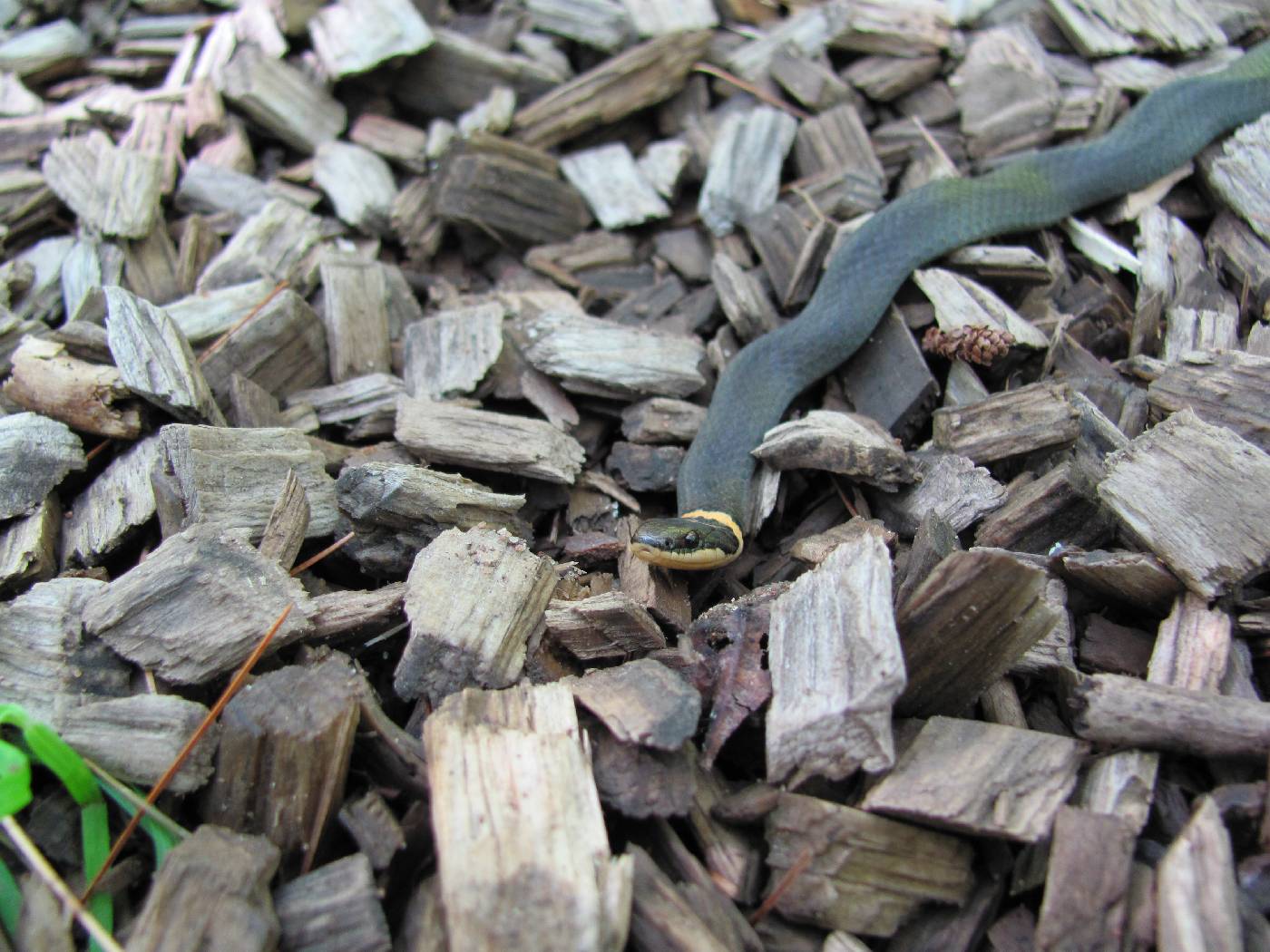
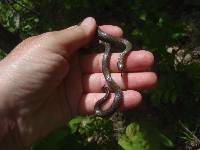
Description: 10-15 inches. Scales are unkeeled, divided anal plate. Solid shiny bluish black to gray on its back, with a bright yellow-orange ring around its neck. Belly is yellow to orange, often with bright red on the underside of its tail. Black spots are scattered across the snake's belly. Ring-necked snakes in northern Minnesota hanve few to no black spots on the belly. (MN DNR, 2022)
Food: Insects, earthworms, slugs, small salamanders, frogs, and other snakes. (MN DNR, 2022)
Habitat: Often found on south to west-facing hillsides and bluffs in southeastern Minnesota, and under rocks, logs, or bark in damp deciduous forests in northern Minnesota. These snakes are quite secretive, spending much of their time under flat rocks and in crevices. They prefer areas with abundant ground cover. They overwinter in rock crevices or animal burrows that go below the frost line. (MN DNR, 2022)
Reproduction: Ringneck snakes mate in spring and sometimes in fall. The females lay an average of four eggs in early summer in a nest. The eggs hatch within eight weeks. Young are 4 to 6 inches long. At times, several females lay their eggs in one nest. (MN DNR, 2022)
Conservation Status: The ringneck snake has no special status in Minnesota. (MN DNR, 2022)